


Vineyards & Wine


Sylvaner Alsace


History
Traditionally in Alsace culture, Sylvaner is from Austria and would spread throughout Central Europe to Russia, Australia and California. Transylvania is sometimes regarded as the homeland of this grape by virtue of its etymology.
.........................
Tasting
Appearance
the colour is clear, revealing green tinges, thus emphasizing its characteristic freshness.
Nose
the nose is fresh and light. It offers a bouquet that is discreetly fruity and floral: citrus fruits, white flowers, freshly cut grass …
Palate
the mouth is open and pleasant, structured around a thirst-quenching freshness.
.........................
Foods & Wine
Sylvaner offers a light and delicate touch as an accompaniment to all shellfish (oysters, scallops, clams, etc.), as well as fish, charcuterie, or simply enjoyed on its own. Appreciated like this, it is ideal as an easy-drinking summer wine.
.........................
Ampelography
Leaf
Orbicular, smooth or lightly bubbled. Large, serrated edges.
Bunch
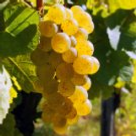
Medium, cylindrical or cylindrical-conical, compact.
Berry
Spherical, medium, green with brown specks, turning golden yellow with good light exposure. Relatively thick skin, neutral flavour, slightly acidic.
............................
In the Vineyards
Sylvaner flourishes in light, sandy and stony soil. In certain terroirs, it produces wines of great finesse. Sylvaner is a varietal that provides a regular yield, even though it is succeptible to spring and winter frosts.


